

#57 How to get Annual Planning right
with
Shantanu Shekhar
,
Director of Revenue Operations at Personio
December 2, 2024
·
39
min.


Key Takeaways
- A dedicated planning week beats months of back-and-forth alignment. Personio brought finance, revenue, product, HR, and engineering into one room for a week in Munich and left with a 95% complete annual plan — something Shantanu argues would have dragged on indefinitely without that forcing function.
- The KPI tree is the Rosetta Stone between finance and revenue teams. By breaking ARR down to first principles — new vs. existing business, pipeline by source, win rate, ACV, churn vs. downgrades, expansion by motion — every stakeholder can trace their specific metric back to the top-line number and own it explicitly.
- Monthly targets beat quarterly ones for in-year course correction. Quarterly reviews are often too late to pivot; monthly cadences give teams enough signal to identify red nodes in the driver tree and have specific, actionable conversations about why a product launch or pipeline source is underperforming.
- RevOps should hold the pen on the driver tree, not just contribute to it. Because RevOps sits at the intersection of all input and output metrics, Shantanu argues it's the only function with the vantage point to design the full tree — then pull in product, HR, marketing, and finance to validate the assumptions at each node.
- Undefined metrics are a political liability, not just a data quality problem. Without documented definitions, teams game metrics like ramp time to look competitive, and cross-functional conflicts between marketing, sales, and CS become impossible to resolve objectively. A shared data dictionary — even a two-page memo — removes the ambiguity that fuels those disputes.
- The worst annual planning process hands CROs a number derived from investor expectations with no input from the field. Shantanu's approach inverts this: start with granular assumptions at the leaf nodes of the driver tree (leads per SDR FTE, ramp time by segment, product-led expansion pipeline) and let the top-line number emerge from the bottom up, so owners are accountable to targets they helped construct.
Hosts and Guest

Janis Zech
CEO at Weflow
Janis Zech is Co-founder and CEO of Weflow and previously scaled his last B2B SaaS company from $0 to $76M ARR as CRO. He shares how annual planning can create clearer alignment between revenue teams and leadership, drawing on his experience building repeatable growth operations. He discusses practical ways to turn planning into a more strategic, cross-functional process.

Philipp Stelzer
CPO at Weflow
Philipp Stelzer is Co-founder and CPO of Weflow, where he focuses on how revenue teams capture activity, inspect deals, and forecast inside Salesforce. He brings a product perspective to annual planning, showing how better data capture and visibility can support stronger decision-making. He discusses the workflows and systems that help teams plan with more confidence and accountability.
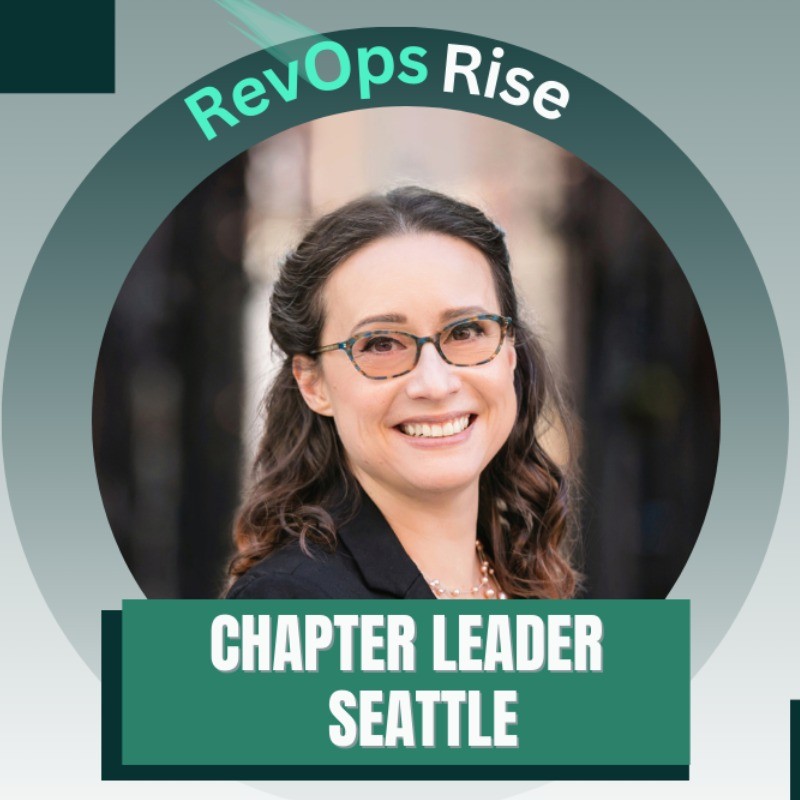
Shantanu Shekhar
Director of Revenue Operations at Personio
Shantanu Shekhar is Director of Revenue Operations at Personio and a former RevOps leader at LinkedIn and Gong. He shares insights on how RevOps and finance teams can partner effectively to drive strategic decision-making, including designing KPI trees and fostering alignment across teams. He discusses methodologies and frameworks that help RevOps professionals take a seat at the leadership table.


Full Transcript
Janis Zech: Welcome to another episode of the RevOps Lab. We are here with Shantanu from now Personio, but you have a broad, long experience in RevOps. So welcome on the show. Really awesome to have you.
Shantanu Shekhar: Thank you so much, Janis and Philipp. Really excited to be here. Always excited to help contribute to RevOps and delighted to see now we have the German connection as well, right? True. You and I know they have been in person, so delighted to be here.
Janis Zech: Yeah. You joined one of the great German companies, so congrats on that. But maybe for our listeners, can you give a brief introduction to who you are and what you've done in the past?
Shantanu Shekhar: Perfect. Happy to share. Maybe I'll talk about three quick parts of my introduction. I can spend as much of the podcast as you want talking about people. I'd rather talk in the public, but very quick things. I've been now in SaaS and SaaS RevOps for the better part of a decade, but across a few companies, including LinkedIn where I spent a good amount of time learning the ropes. I was at a smaller startup called Nitro for a while which was basically a PDF player and then I was at Gong which I think a lot of your listeners might know as well which is the revenue intelligence side. But across these different sized companies, I actually brought forward my learnings from a past life. I used to be a management consultant at Bain and Company, so I brought them all together. I think it's been incredible to see just how a multibillion dollar company like LinkedIn has some things which you can obviously scale and learn and drive across RevOps. Because in the end, when you're bringing all these pieces together in a SaaS company, the mechanics of it work very similar, while you have to look at different scale and what works.
Janis Zech: Yeah. I think it's fantastic to have someone who has seen the very large setups, right, and the very small setups. And now in Personio, right, like, I'd say scaling towards ideally a public company, fingers crossed here. So today we want to talk about the partnership between finance and RevOps. And I think it's quite timely as we've all gone through our annual planning cycles and usually finance and RevOps ideally team up on those processes. You know, maybe so before we chatted about this episode, right, like you shared that you had an annual planning week where you brought together different folks to do your annual planning. Let's maybe kick off there and then we'll go into a bunch of interesting topics.
Shantanu Shekhar: Sure, Janis. Happy to do that. That topic, I'd say pretty much one joke I've always made is the P in RevOps stands for planning. And I think it's crucial if I think about that relationship between finance and RevOps is so important, especially in the world where now I would say our typical CROs and CFOs have to work very closely together. I would say in a SaaS company, your RevOps leader and your FP&A leader have to be very closely aligned as well. What we did essentially, and I think I've suggested this in a few companies before, it's the first time I've seen this really work well. And kudos to the finance team for setting this up because I've just been here three months now. We actually had a planning week in Munich where all the different stakeholders across the company and not just from finance and the revenue teams, but also from product, from engineering, from other organizations outside what you might call the standard revenue generating teams, HR, talent acquisition, all the pieces that come together. It was fantastic to have everyone in one room. What we basically did was we came in with the objective of leaving Munich in that week with almost eighty-five to ninety percent plan done. And I think by the end of that week, we actually had a ninety-five percent plan done purely in terms of the revenue or ARR number we're targeting and different elements to it. What really helped us get that together was while there are so many different stakeholders, you have to speak a common language. We did some homework together. We also built something which I'm calling the driver tree, which is to try and break down everything on the revenue number to its first principles. Because a challenge most entities, from my experience, often happens is you could be talking about X percent growth, Y million euros of ARR. That's a very high level conversation. How do you break that down and start? That's what we've been doing. It was very helpful to come in, have one aligned view and walk out from there with clarity and alignment there as well.
Janis Zech: Yeah. So you call it the driver tree. I think it's like a KPI tree. Different people call it different things. Right? Let's focus in on that more. Right? I think this is a fantastic concept. And I have one view on this and then, you know, let's dive into it. I think many of you have read the revenue architecture book, right, from Jacco. And I think there's this one graphic which I absolutely love, where you have the different layers of the metrics. And so, right, so basically, which all are based on the customer journey. And then it levels up to performance metrics, to financial metrics, to SaaS metrics. Right. And I think this is a concept which I think is so crucial, especially in SaaS. Can you explain a bit more about the different layers and what is driving what?
Shantanu Shekhar: Super. And by the way, I'm a big fan of the entire work there in revenue architecture, winning by design, everything that they've done there. You're right, it has to all start with the customer journey or the customer lifecycle. One definition I always use for RevOps, for your listeners, is I think RevOps is basically optimizing the customer lifecycle and the talent lifecycle at the same time. So I think this is one great way of bringing those pieces together. So the way we split the driver tree or the KPI tree, as you're calling it, was almost go back to the different layers. Start with if at a very high level you're talking about — and by the way, I'm talking about purely a SaaS setup, a few adjustments for non-SaaS, but the overall principle applies. Let's say you have at the left of the tree, if you go from left to right, you're looking at X ARR or revenue with a growth number. You then start very quickly splitting into what percentage of that is coming from new business and what's coming from existing business. That's the first. Again, depending on the size you're at, you mentioned the different size of companies. If you're an early stage company, the new business part is probably the highest contributor, depending on how big you are, it's probably even keel. And then once you get to the really large companies, it's your existing business really driving more of that. Almost like you split that there. You then start going back into the principles of what is that new business made of, what is the existing business made of? So new business, again, a SaaS perspective, the simplest definition is pipeline times win rate times average deal size. So you're going to start looking at that. How does the pipeline come? Pipeline comes from both maybe different sources depending on the company. You could have outbound sources, inbound sources. Outbound lets you have an SDR or BDR team reaching out. You probably have an AE source approach where you have your sellers going in and creating pipe for themselves. And then on top of that, depending on the company and region, you might be using channel partnerships or a different partnership model as well to create. It could be tech partnerships. That itself can be a different topic you've had in one of your podcasts as well. So that's the outbound pipe. You then continue in that same journey. What does that outbound pipe mean? I said SDR pipeline or BDR pipeline — that's based on leads per FTE times the number of FTEs, which again, that has ramping attrition. If you see that entire flow, you're going down all the way down to the bottom number. Similarly, you can start breaking inbound, can start breaking all of these different elements within that. The part which has been very helpful is as you go back across that tree, and similarly on existing, you start splitting churn and expansion, you start thinking of churn as actual cancellations versus downgrade in spend. You start making expansion in different sources or different movements you might have contributing to that. At the end, when you get to the last node in that tree, you have different metrics or targets you have and you can define that based on assumptions and what's changing, where you're investing. We had a lot of those conversations. As I mentioned, people from product day, we're like, we're going to do this. So at the last node, we expect to see X, Y, Z difference. I mentioned people from HR. When I said SDR outbound, we're saying, oh, we used to have X attrition. This is the time to fill. This is the actual ramp. How do we accelerate that number? And then you create almost an owner or an accountable person at the end saying this is your metric, this is what we measure you on. And then you spend time saying what are you comfortable with? So then people came back with, you said X percent, can you go Y instead? This is why we would need or this is the investment we're making. So that entire flow, we literally spent the whole week going through each of those nodes in the tree and going at it by region, by segment, by leader across the organization. That's how we're now pretty much thinking about using our next year to drive with those targets we've defined. In fact, it's almost a month since we left Munich. We're now working with the data teams and we're trying to build the Tableau dashboard or reporting for you to start looking at that so you can then start holding people accountable.
Janis Zech: And just curious, so that's of course like a lot of work, a lot of details. So what kind of timeframe do you use to look at that? Do you look at the entire year? Do you actually break it down by different quarters to factor in seasonality effects? And is this then something — sorry, those are actually three questions now — and is this something where you're actually saying, okay, hey, team HR, team product, etc., you need to come to this week in Munich, just to use this as an example, with all the data prepared. And then during that week, you basically spent that purely on alignment, but not on trying to get the data anymore?
Shantanu Shekhar: Very good questions. I think if I break those three things. Number one, just on the sequences, when we came into Munich, we all had an annual number in our head, so we're all looking at what's the number we're heading towards. So we start with the annual and we'd ask people to do their homework but we literally use the tree to guide the conversation there. I'll give you an example. Let's say I mentioned the inbound pipeline. We had the marketing team, the CMO, the marketing leaders on demand gen and so on and there. We spent our time together on trying to figure out what is the number of — if you use MQLs or marketing qualified leads in a certain region segment cut — that is going to help guide towards this pipeline number. We'd ask them to think about that overall number but then at the back end they do have already that's broken down into when they're investing, what the different channels feeding was. Again, while we're looking at this number, there's a separate driver tree, if I call it KPI tree, behind each of those. So then marketing says if you know X leads, how many are coming from pure paid search versus performance marketing, those different sources of pipeline, events, and they start thinking about that in terms of timing. To fill up your point, maybe there's some elements of it which will be in Q1 versus Q2 versus Q3. While we started with the full number and we had the conversations in the meeting on the full number, you then go back and work with these teams on what the quarterly but eventually monthly will be. As you're building the reporting now, we're actually building it into monthly targets. The reason we're doing monthly, and this could be different for different companies, different sizes could do it differently. We believe in a monthly cadence, you have more time to start reviewing and pivoting quickly. Again, seasonality, obviously, within a quarter would be very different. Where you expect to pace within a quarter would be very different as well.
Janis Zech: Okay. Yeah, I love the monthly aspect. And on that note, it's like also because I think, you know, when you do a forecasting, a bottom up forecasting, right, you kind of like want to get into at least like a monthly cadence and not do it quarterly. So I think the monthly aspect helps there. And on that note, so you have that monthly plan. Do you then use that for accountability? Do you then compare what you actually want to be and what the reality looks like? So this is then an ongoing thing that will continue to accompany you and the other teams over the rest of the year, including, for example, product, you know, when they make a claim like, oh, we think this and this feature will improve, I don't know, upsells by X percent or something like this.
Shantanu Shekhar: Exactly. Again, if you take that product example, let's say there's a — and obviously we're a multi product company with a platform — but let's say we have product X coming up which is supposed to be live in April. We put in on that driver tree when we said expansion, we had an expansion pipeline, product led growth. Let's say you built a node saying this product will drive XYZ pipeline because you're splitting your sources of pipe. In April, when we're doing our review and we say, oh, that node green, yellow, or red? You can literally go back and say, hey, why is this right now red? Then the conversation becomes a lot more actionable because you're not having a conversation of why are we missing X million of revenue? Why is this pipeline created from this product, or with this feature change, will have win rate shift in a certain segment. Why is that not happening? You're just creating that very specific conversation and able to go back. To your point, I'm sure a lot of companies already do this in a different way. You have the weekly forecasting rhythms towards a monthly or quarterly forecast depending on how you're working. You probably have weekly or in some companies I've seen biweekly pipeline reviews. I always separate these two. Forecast is looking at almost where the number is. Pipeline is almost pipe generation, but this is more coverage. So how do you again look at different sources? Where is the pipeline coming from? It's the same mentality. We're just trying to bring it to a slightly broader piece. I think the part which worked for us, at least, as we are setting this up — and I'll probably be able to give you a much better report back next year on how this eventually landed — but the part which everyone across the executive team needs to be bought in, right? So everyone from it needs to be driven top down from the CEO, who has to be behind this thing, is this is how I'm going to hold my exec team accountable to what we're delivering. Depending on the company setup, if you have a Chief Revenue Officer, a CRO, or head of sales, whoever is responsible for that revenue number, how do they then work with the relevant partners as well? And then that's almost like a conversation because if it's on a quarterly cycle it could be too late to influence and shift things. While monthly you can quickly track, see risks and start pivoting.
Janis Zech: So I assume that you have the top down number, you break it down into the KPI tree, and then you have the reality that is already there. Right? So you have your bench. You have your historic data. How do you bring those things together?
Shantanu Shekhar: Good question. Because we're doing that mapping right now, I think it's very fresh in my head. Sure you enable that for your customers. People think about data dictionary and definitions and metrics and what metrics are you using. The bench of the data we're starting with, you probably define data in a certain way. As I mentioned, KPI tree, for example, on that tree, maybe one piece that I had in there might have been a good example of ramp time. What do I mean by ramp time? How do we define that? Maybe we had some dashboard on ramp, but I'm sure if you ask five different people, A, it's different for an existing business rep versus a new business rep. B, it's different as you go by the size of the company, the segment you're selling into, the region you're selling into. So there are so many variations of it. So what is the definition? How does that shift by which part of the business you're looking at? And then you go back and start looking at historicals. We've planned in a certain way, and I think we were able to really break that down and have those conversations to, let's say, X is the ramp time in existing for a certain product, let's say product three or four that we're selling, how do you break that back to the actual number? That's the conversation you need to have both with the owners of that metric, but also depending on the quality and size of the metric itself and the impact, how do you ensure that there's one aligned definition? I do go back to this is why RevOps is so helpful because you don't have five different teams with five different definitions, which can happen. So this piece will also help in driving almost a movement towards your definitions, your data dictionary.
Janis Zech: Yeah. And then you basically take the existing data, right? Let's assume we have the right definitions. We are all aligned, and we actually have the different stakeholders in the room who actually know the definitions and know the drivers, which I think is actually a lot of work. And I would say absolutely wouldn't take it for granted because the reality often is, right, finance sits in their room, maybe revenue sits in their room, and then they come together, but there's no alignment, no accountability. And also knowledge, I think, from either side in many setups, which is not great. But let's assume that is all there. Right? And you see, well, you know, the reality right now looks like this, and this is what we need to get to, and it's just not realistic. How do you resolve that conflict?
Shantanu Shekhar: Very good question. I would underline what you said, Janis, which is you can't take for granted. Even within each of those teams, there are probably so many definitions and ways of looking at it. I'm sure you've experienced this as many times or more as I have, which is a simple word can have fifty different meanings. So it is so crucial to get that together. I think the part which will help, at least that we're trying to do, is starting with what's almost that source of truth for the metric. We're defining all of that together. Second, I always think about we need all these forums of intersection to bring this together. What I mean by that is how connected and closely looped in the finance or the revenue teams, especially in this example. I have it open on the screen right now, funnily enough, which is I have a weekly check-in with the VP of FP&A at Personio, for instance. We'd spend a lot of time literally — I think we spent some time on Friday, went next on Tuesday — but literally aligning on what are some of the definitions, what are some of the questions, even things like what gets committed as ARR, what does not, just very clean, clear cut conversation. If you have those forums of intersection, you can be on the same page ideally. Second, I'm a big fan of documentation. Also with AI, we now have a lot more speed to be able to do that as well because you can start putting your thoughts down and get AI to help you in it. But literally being able to streamline and have a document on, even if it's a two page memo, these are the different things that we have as definitions. This is what the tree stands for. This is what we're going to use. This is how we measure it. These are the owners. And then using the weekly, the monthly, those interactions really go back and review. So I think documentation and frequent communication is the key.
Janis Zech: Just one addition here. I think intranets, you know, like they're often laughed at or like, you know, it's like an old thing. Big companies need to have it, but nobody really updates it and so on. But intranets can be so powerful and useful if they're properly set up. Particularly if you talk about like KPI definitions, because I mean, once you set them up, you probably don't want to change them anymore. So I think this is just a good place to keep these kinds of things and also have it part of the onboarding, particularly for managers and senior management. They need to be aware of what those KPIs are. Obviously, everyone should be ideally, but they are the ones who are most critical around it. And one thing where I think also where these clear definitions help, if they are defined right from day one when somebody starts, is also to avoid company politics. Like if you have clear definitions for KPIs. And I think Personio is now at the size of a business where you just naturally have these company politics. You know, when you talked about ramp time, for example, I was thinking about like how different managers try to — you know, it's like a public chart or a sheet. They put in their ramp time and then somebody sees like, oh, they have like a shorter ramp time than I do. Maybe I should reduce my ramp time. But then it's actually not true, right? So they just go lower just to, you know, be more competitive, but actually it's higher. Stuff like this, right? This stuff just happens. And I think it bubbles up, particularly during these planning processes.
Shantanu Shekhar: And then again, your point — and then an example there. It's not only for, let's say, more of a scale up side, even in a startup, because if it's not put down on paper, it's in somebody's head. If it's not put down on paper, it's very easy to have ambiguity on what's real and what's not. But having that one source of truth, once something is on paper it's very difficult to question something written in black ink. Totally hear you. I think it's very important. Almost take the time and sometimes especially — but I've been guilty of it as the next person. It's very easy for us to think, especially in RevOps, oh wait, I don't have the time to sit down and document this and put it down. But it just saves you so much time in weeks, years, months, whatever you want to call it. I would strongly recommend taking the time, even in a ten person startup, to document your rules of engagement, your data dictionary definitions, all that.
Janis Zech: One hundred percent. So the intranet is huge. I have a few thoughts here. So one, obviously, these metrics are not just metrics, but actually goals for teams and comp depends on it. Right? So obviously, if you think about that, it has a huge ripple effect. Right? And that's often where the politics are driven. And I think in RevOps, we all know this conversation between marketing and sales and sales and CS. Right. And the common claims of, hey, you know, the leads are not quality leads and they're not well defined, well qualified and so on and so on. Right. I think the same is true between finance and revenue and then revenue and product. Right? And I think we've all seen this as well that — and I think the KPI tree you're outlining here is essentially a way to translate different sets of metrics across different teams. And I think especially between finance and revenue teams, this is so important because finance looks at the SaaS metrics. These are aggregated metrics based on the financial metrics. So this is basically even one layer higher, an abstraction layer higher, which are fundamentally investor metrics to understand the company health and evaluate the market capitalization or the valuations. And then you have the finance metrics. Right? And if you would talk to FP&A a lot, right, you would have a huge discussion around, like, what is ARR? How do we measure ARR? And it's not every company measures this equally. Right? And then it goes down into kind of the revenue metrics, the performance metrics, and then the revenue metrics go down to the performance metrics and into the customer journey. Right. And I think having that kind of construct and then thinking about, okay, what are the influence input factors for all of this? It's just so, so important. And to your point of documentation, if you document this in revenue, but finance has a completely different documentation, it's also a problem. So I think thinking of that, this is basically a company process that runs revenue end to end and that has so many ripple effects. So just really, I mean, this is a long way of saying, I just love what you've just said.
Shantanu Shekhar: I think what — I think you said it so well, because I think it got two big thoughts in my head which just come off what you just said, which is number one, the interconnectedness of all these input and output metrics because it again goes back to what you said at the beginning of the call with the revenue architecture book and the model there. Because let's say when you're talking to finance, we're talking about, hey, what's the LTV to CAC? And again, that's a phrase which is obviously so popularized in the last three years now. But if you break it down to what does it mean in terms of the actual input metrics, on that revenue tree I described, let's say within the new business side, we actually had one node we had that was productivity per rep. So for a lot of your listeners, depending on which international markets they're in, which segments they are, and you're looking at what's the LTV to CAC, that's a little bit too far away from the front line. But what you can look at is what's my productivity in terms of the actual revenue per rep that I'm getting in on an annual basis. And that revenue, what does that mean in terms of the quota to OTE ratio, which again goes back to the finance metric. So that's the interconnectedness I think here. And then the second thought is completely disconnected but — second thought from what you just said, Janis — is you're right, in the end these are all goals, right, at every step of the tree they are all goals. And probably one of the most emotional things that a RevOps team touches is a person's compensation. And I think what the KPI tree or driver tree helps do is for a salesperson it's always black and white. This is my number, this is my target. Have I hit it, have I not? Obviously there's room for checking the components and making it simpler for them but it's very clear. What this helps us do is have that same conversation across the broader company. Teams who don't have a clean black and white plan like a salesperson or a CS leader or whatever, but you're talking to other teams and saying okay this is how I have done versus our revenue goal. And that's the part you said, which is how do you get all those input metrics together to really ladder into the same big number? Then everybody has their own attainment to a goal. That goal is different for each person.
Philipp Stelzer: Just for you doing this now for the first time, you mentioned you came into Personio three months ago. How much time do you think a company of the size of Personio would need? And just to add to that, I was curious, like, so how do you see the role of RevOps there? Like to provide the templates and then, you know, follow up, guide the meetings, guide the week? Yeah. Where do you see yourself in that process?
Shantanu Shekhar: In respect to the company's size, I would strongly recommend doing what we did, having that one week away. If we had not had that one week where everybody was there just dedicated on this, I think we would have still been having this conversation. I think that just saved us so much time. Right. Because I remember we talked about the tree, we came out, then we were able to grab one lead. Like we literally had a very well orchestrated set of sessions, you also had time to literally catch people who were not — especially in a world where we're all distributed in different locations, it just creates that space. So I think that to me is it can be very quick in terms of everything from design to execution. If you have that one week, you just bring things forward. Now, in terms of the role, and I think that's where I'll go back to the first question, in terms of the role that RevOps can play, I think RevOps has that one unique position where you're seeing all elements of the inputs as well as the eventual outputs. So I think RevOps has to almost hold the pen on drawing out the driver tree first and then being able to work with different people. For example, when we did this, it was about a couple of months in. But I was conversant enough with the guiding principles. Then I went to, let's say, our product leaders and said, okay, I have this product. What are the different sources of pipeline? They'll be able to give me where the different sources of pipeline come from. What has been the historical data. You use that unique vantage point to start designing, but then you have to start working with all the different people across all of these elements. Have a very good team at Personio both across my own team in RevOps but also we have a different data team which feeds into it and so on. How do you bring those — we talked about the data points, knowing where to get the data from. All of that in the end, it will be if there's one person accountable for this, it will be RevOps. That's the role you'll have to play. Then making sure at the same time you're keeping finance, the leaders, everyone aware of what is happening and making sure you are getting inputs from there is key.
Janis Zech: I just want to add one thought here. On the finance side, the SaaS finance metrics and investor metrics, they are pretty clear. And they are also quite well defined. Yes, you have maybe a bit of wiggle room here and there. But I think the challenge really comes underneath. Right? The revenue metrics. Right? That's where you have a lot less definition that are alike across different industries and a lot more complexity. Right? So basically, what you are saying is like, that is something that is often hard for FP&A to do. And so you need to team up because the annual plan is usually owned by finance. Right? The CFO owns the annual plan. That will also not change. But what you will suddenly see is if you're basically building this KPI tree, right, you're suddenly sitting with FP&A and the CFO and the CRO and your CMO if you have one or, you know, VP of marketing, and CS and the product leaders in one room talking about some of the most important things in the company. Right. And really steering where to put dollars, where to put investments. That is what I think I would call strategic discussions. Right. So it's this one process that — and then I really just love this week because I think one thing is to sit somewhere and do this. But it is so important to have understanding from the leaders from different areas and then to actually have accountability against it. Right. It's very different if you just put a number in front of somebody and say, well, that's your number. And I remember this dinner with Sam Jacobs, who was here in Berlin January last year, twenty-five CROs in a room. And they were all so pissed at the annual planning process, because what basically happened was, you know, the CFO came up. Basically, investors said, the board said, okay, this is what we need to hit to get to our next stage. Right. Whether that's funding or public. And then they basically derive the kind of finance metrics and the SaaS metrics. And then they put it in front of the CROs and basically said, this is what you need to achieve. And this is how it often looks like. And obviously, they look at it and they say, okay, look, this is what the reality metrics look like. Right. The performance metrics, the reality in the field day to day looks like. And there's just a huge gap. And I don't know how to close that gap. And I think that's just the worst way of doing it. So the way you did it, it's just so awesome.
Shantanu Shekhar: Thanks, Janis. Really appreciate it. And I think it's always a risk because if all we have are opinions, let's go with mine — go with data. I think this is a good example of let's get data to the conversation, which is how do we get data and the data at the highest level, the CFO and the finance team have the full data. What are the inputs to your point that FP&A does not have visibility into? That's the part where we can hopefully drive more conversations. To be fair, again, like I said, a couple of companies I've been in, during LinkedIn, quite often you have those assumption driven conversations on input factors, which is huge.
Philipp Stelzer: With all that passion — from the outside, he's glowing. He's glowing. He can't see it, but he's glowing, basically. He's absolutely in love with the KPI tree. Shantanu, thank you so much. We always ask our guests one closing question, and that is what book would you recommend to our listeners?
Shantanu Shekhar: Super. So I've been reading a lot of books, but the one I would recommend, and you can probably see it on the top there in my background, it's a book called Legacy, which I think some of you might have read. Basically about the New Zealand rugby team and the principles that they use. It's very, very good ones and I think very directly translatable to how we lead in a B2B SaaS setup, any company really can drive. One small example there, is the first chapter is how do you sweep the sheds? As a leader, quite often, people think about, hey, this stuff which is not my job, but literally everything is everybody's job. How do you literally go in and do that? Yeah, that's the book I would recommend. Legacy.
Philipp Stelzer: Perfect. Thank you so much. We'll add that to our list. Much appreciated. Shantanu, again, thank you so much for joining and have a great day.
Shantanu Shekhar: Thank you so much for having me. Love the discussion. Thank you.
More from RevOps Lab
Learn more about GTM & revenue operations
RevOps Lab Podcast


Free Forecast Cheat Sheet

Free RevOps Salary Report


