

#53 Growing and Leading a High-Performing RevOps Team
with
Eric Portugal-Welsh
,
Director of Revenue Operations at Deputy
November 4, 2024
·
37
min.


Key Takeaways
- Over-ask on headcount to land what you actually need. Eric requested 10 new roles knowing he'd be negotiated down — his real target was 4. Building in that buffer gave him leverage to secure the headcount that actually mattered.
- Hire former managers who want to return to IC work — they're your highest-leverage hires. These people already understand what leadership needs, communicate proactively, and reduce your management burden without requiring much oversight. Eric's principal RevOps hire — a former director who wanted back into an IC role — immediately freed him from tactical work and became a succession candidate.
- Flip the interview: let candidates ask all the questions. Eric deliberately avoids asking standard interview questions, instead giving candidates the floor to ask whatever they want. The quality and depth of their questions reveals curiosity and business acumen far better than rehearsed answers — and curiosity is the one thing you can't train.
- Generalist vs. specialist decisions should follow your go-to-market geography, not just function. Deputy's EMEA team had near-zero time zone overlap with HQ, so Eric hired a RevOps generalist there rather than a specialist — because the region needed someone who could handle everything, not just one domain. Intake data showing mostly tactical EMEA requests validated that call.
- Build your management layer before you need it by hiring future leaders as ICs now. Eric identified his three functional leads (marketing, sales, CS ops) before the org structure required a management layer. When headcount grows to justify it, the people and trust are already in place — no scramble to promote or backfill.
- Avoid candidates from large enterprises when you're in scale-up mode. People who've built careers at Google, Amazon, or Microsoft are often conditioned to slow, process-heavy environments. At a 450-person company moving fast, you need people who've operated in similar chaos — not those who've had entire teams handling what one person needs to own here.
- Intent-based leadership means your team should arrive with a decision, not a question. Drawing from Turn the Ship Around by David Marquet, Eric coaches his team to think through all scenarios before bringing something to him — and to present what they're going to do, not ask what they should do. The leader's job is to trust and validate, not to decide.
Hosts and Guest

Janis Zech
CEO at Weflow
Janis Zech is Co-founder and CEO of Weflow. He previously scaled a B2B SaaS company from $0 to $76M ARR as CRO, and brings that operator experience to this episode. He shares practical perspectives on building high-performing RevOps teams, from hiring and onboarding to creating the right structure and culture.

Philipp Stelzer
CPO at Weflow
Philipp Stelzer is Co-founder and CPO of Weflow. He focuses on how revenue teams capture activity, inspect deals, and forecast inside Salesforce, which gives him a clear view of RevOps execution. He discusses the systems and habits that help teams scale well, including how to support collaboration, visibility, and strong onboarding.
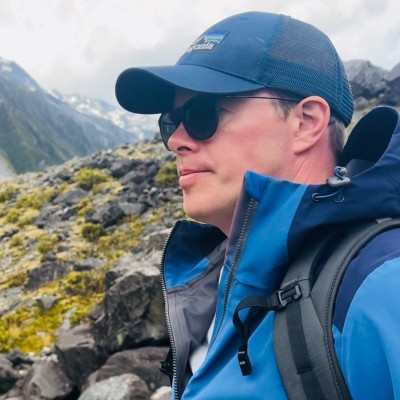
Eric Portugal-Welsh
Director of Revenue Operations at Deputy
Eric Portugal-Welsh is Director of Revenue Operations at Deputy. He shares insights on growing a successful RevOps team, having scaled his team from 3 to 7 people over the last 14 months. He discusses organizational design, hiring the right talent, onboarding new team members, and fostering a collaborative culture.


Full Transcript
Janis Zech: So welcome to another episode of the RevOps Lab. We are here with Philipp, and our guest today is Eric Portugal Welsh. I hope I pronounced this correct. Eric, warm welcome.
Eric Portugal-Welsh: Yeah. Thank you. Happy to be here.
Janis Zech: Yeah. I mean, we had a fantastic chat a few weeks back, and I'm so happy to go into this episode today. Today, we talk about hiring the RevOps team. You've recently grown the team from, I think, two to seven folks. And I think we all know the memes, RevOps team of one, which is probably one of the hardest jobs in the world. But yet today, we wanna go through organizational design, sourcing, selecting, you know, and then obviously the onboarding and also how to lead those teams and make them successful. And I think there's a lot of nuggets you will share with us and the audience. So, yeah, super excited about this. But before we dive into that specific topic, who are you? What do you do?
Eric Portugal-Welsh: Yeah. Well, thanks for the introduction. Yeah. My name is Eric Portugal Welsh, like the country and the nationality, but neither Portuguese nor Welsh. I work at a company called Deputy. We are a shift management platform. We're founded in Australia, global company now with about four hundred and fifty employees. And if my numbers are correct, about a hundred of those are in some go to market function. We have — and like you said, I started — it was actually a team of three. We've grown to a team of seven over the last thirteen, fourteen months that I've been here, and it's been an exciting wild ride. We have a lot more growth coming this next year. Probably some more hires on the team to support different functions. And, yeah, it's interesting. I'm really happy to talk through this today because everything you see on LinkedIn in any of the RevOps groups, it's RevOps team of one. And so I'm excited to talk through this topic today.
Janis Zech: Yeah. I mean, as a founder who started a few companies, this is one of my passion topics, as Philipp would say, because, obviously, I think anyone who's read From Good to Great knows how important people are. And I think it's this cliche thing to say, but everybody who's worked with the most amazing people in their career will always remember those people and would love to work with them again. I think it's just something that is extremely hard to achieve and requires a lot of rigor and focus to actually get it right. Let's maybe dive in with — so you started as a team of three. You went to seven folks. Right? Like, how did you think about organization design? How many open recs did you have when you started? Like, how did you actually know what you were looking for?
Eric Portugal-Welsh: So I came in and I spent the first month or so just — as everybody should do — which is just getting the lay of the land, not making any decisions, talking to the team, figuring out what was happening and what the previous leader's plan was. That part was easy because there was no previous. The previous leader had been out of seat for about a year when I started. And so when I started, we had two people sitting in a sales operations function and one person in marketing ops, which immediately threw up red flags, but we weren't supporting the entire go to market or revenue operation functions. We're missing customer success. A lot of organizational change at leadership level happened when I started as well, and I ended up not starting off reporting into our revenue function and then moving over to our customer team function. So I pivoted my focus to the customer team pretty early on, and we determined that we needed somebody sitting in customer success, customer team operations pretty immediately. So that was the first rec I opened and hired. And luckily, I came in closer to the back half of the year, and we were able to put in kind of a dream list of positions that we wanted to hire for. That included more support on the marketing operation side. I think everybody who's ever worked in marketing operations knows that that's never a one person job. And we have actually quite a large marketing team of about twenty five or thirty people. So the lead marketing ops manager that we had was pretty stretched thin. And being a global team, it was really difficult for her sitting in the US to support Europe and Australia and the US at the same time. And then from there, I just created a wish list of every position that I would possibly want, and I believe it was actually ten additional roles. And as you know, like, when you're budgeting and coming up with a headcount list, you should always overask by a lot so that leadership can negotiate you down to what you actually want. So what I really wanted was four additional headcount, and so I asked for ten, and some of those were kind of just dreams that I knew we weren't gonna hire. But yeah. I effectively wanted at least two people sitting in each of the three branches of RevOps — customer, marketing, and sales. And that was effectively what we got in the headcount plan for this year.
Janis Zech: And how did you come up with this? So I think this is already interesting. Like, so you're basically saying, okay, we have these different departments that take care of different parts of the revenue generation. So like the more top of funnel stuff, then more like the actual conversion, and then the right side of the bowtie and so on. So why did you choose this approach and not a more central approach, which I think is also quite popular? I've heard often that you kind of have more like a central team, then everybody can do everything more or less. But you're going in a different direction there. Why?
Eric Portugal-Welsh: So we started in a different direction and we actually have kind of moved more into a hybrid approach where we have specialists on the marketing operations team. We have a specialist sitting in customer team, and then our sales operations function has kind of transitioned into more of a central where we can do just about everything. And what we did is we hired a person in our UK, our EMEA team to sit as a generalist specifically for EMEA. As you know, especially with a headquarters in Australia, a satellite headquarters in the US, the EMEA team has almost no overlap, waits most of the day. So we thought it was incredibly important early on to have somebody sitting there who could do everything for the team. And that was really important. I also had to hire somebody in the US who was a very senior generalist. I found early on that my time was getting dragged into too much of the tactical debt that the team had. So I needed somebody on the ground who could kind of sit as a layer between the tactical and the strategic with me. And effectively — and this is kind of an interesting use case because I'm going on parental leave for about six months soon. So I needed somebody in seat that could replace me while I was gone. And luckily, we had the headcount available specifically for that person.
Janis Zech: Got it. Got it. I mean, I think it makes sense to have these specialist roles, particularly also in marketing because it is super detailed if you wanna get it right. I'm not sure what their scope of work is, but I mean, just thinking about attribution, for example, and also a lot about the automations — you can do a lot of things wrong. They can have crazy ripple effects. It can be very expensive. It can be very, yeah, hurting the brand, really.
Eric Portugal-Welsh: Yeah. And it takes years to learn all that and continuous learning. So, yeah, I totally understand the decision there.
Janis Zech: Yeah. It sounds like you have a remote team. Right? Or is it like a part of the team central in an office?
Eric Portugal-Welsh: So we have two people sitting in our headquarters office in Sydney, Australia. His role is gonna change a little bit into kind of a more generalist function. But we have a sales operations manager in Australia, and we also have kind of our junior marketing operations analyst in Australia too. And I found it to be important as we're hiring new roles to have an even distribution across the globe as much as I can. Right. We want — like, the bulk of our marketing team is in Australia. It's an important market. We need somebody who understands it there and can support our lead marketing ops manager who sits in the center of the US effectively. And the reason we just did a generalist — not just a generalist, a RevOps manager in the UK — is really so that they could support everything, all the tactical questions that were coming up. And early on, we implemented an intake project or program globally so we could see exactly where all of our requests were coming from, what type they were. And most of our EMEA ones at the time were very tactical. So that's the profile that we hired for over there.
Janis Zech: Yep. Yeah. I mean, we had Samat Mittal from Rubrik on the podcast and they are a very scaled RevOps organization. Right? So super interesting how that then scales further into, for example, what you're just referring to as field ops. Right? That's a big part of their area or strategy and planning. Then the technology team gets spun out and then kind of the general specialists on marketing, sales, and CS ops. How does your current organization look like? You know, like, what are the seven people doing? Who reports into who? Is there even a layer between you and any of those?
Eric Portugal-Welsh: Yeah. It's pretty flat right now. So everybody reports into me. And my goal as we scale further is to have a management layer that sits between, and that's either going to be kind of the three pillars leaders. I have those people in place — the people I would hand the reins over to to manage the different functions right now. But currently, everybody reports into me. The company as a whole has a layering policy that managers have to have at least three direct reports in order to implement a management layer. So currently, we don't have that in each of the functions. We don't have three marketing, three sales, three CS ops people to create that layer. But that is effectively what I had when I drew the map for the ten people that I wanted this year. I had our marketing ops leader, sales ops, and CS ops with two to three people under each of them. And that's how I anticipate next year to play out as well, but what it might end up looking like is a RevOps leader who owns sales and customer success and then a marketing ops leader who owns the rest. Because I do think that with our current org structure, we have a commercial team that has marketing, sales, and customer success all rolling up into the same c suite leader. Now, marketing is always gonna be — I don't wanna say a standalone function, but a function that needs very specific skills and specific people doing that full time, whereas sales and customer success, renewals and so on, that's a similar skill set that can have similar people working across the borders.
Janis Zech: Yeah. There's one thing I just wanna highlight for the audience which really resonated with me. So you're at — right, like, with four hundred fifty people, that's quite an organization now, and sounds like you are going to grow, which is great. And what I really like what you said there is you already have those people in place to take care of adding that extra layer of management. So first of all, I think the general idea that more than eight direct reports is hard to manage — it's always better to have less. So I think it's good to already think about that. And then I think also when hiring, right, I think it speaks to your leadership qualities that when you hired, you already thought about, like, is that person maybe a potential leader to take over some subdepartments in the RevOps team? Can I build them up to become that person, or do they already come with the qualifications and skills necessary to do it? Right? That's something we need to think about when you scale a team, and you already know that there's gonna be growth in the future — you're going to need people who can then also manage and take work away from you as the organization grows. And I think this is something that is often not done really well. So I just wanna point it out because it might otherwise not be so obvious to listeners.
Eric Portugal-Welsh: Yeah. No. That's a great point. And the RevOps leader that we hired who's effectively gonna take over for me when I go on leave — within the first couple weeks of him starting, so much came off my plate. It was amazing. I was able to think through the day and not be buried in the weeds. And having those people, those leaders in place already for the future, it creates a great thought partnership across the team. I don't feel like a manager of these people. I feel like a thought partner and a yeah, just like a coworker or colleague with them. It's great.
Janis Zech: So I have one thought and then one more question. So thoughts — like, something I wanted to point out is how deliberate you basically make those decisions of the org design. Right? Okay. We have a team in Australia. We have a big market in Australia. We have a team in EMEA. They need support. They are all on their own. But then we have the different functions. And you have to bring those things together and it matters a lot. Right? And so basically, building high quality teams always starts with, like, what are you actually looking for? How should that be structured? And that changes over time. Right? Second thought here — also really like this distinction between marketing and then, you know, all things like partner management and basically the sales side and CS side. I think it's actually quite interesting and it triggers further up, right, like, kind of what does the c suite look like and how — what's the roles and responsibilities of the CMO or CRO? Should CRO run marketing, own marketing, or not? Right? Like, is that then a true CRO? And in my mind, in the way we think of, for example, CS, that is a lot closer aligned to actually sales than the marketing side. Right? I think the barrier between marketing and sales is a lot deeper than sales and CS. And I would argue that CS should think a lot more like sales. And big fan of Daphne Costa Lopes from HubSpot. We had her on the show, and we talked about that as well. Right? Like, how do you actually run CS with a strong CS qualified opportunities, partner management, forecasting. Right? Just something that is really interesting. Okay. Enough thoughts. Let's stay on this topic. So you mentioned you found somebody who was amazing, took a lot of work from you, and could be a potential successor even. Like, how do you find those people? Right? How do you source those people?
Eric Portugal-Welsh: Yeah. Well, that one was relatively easy because he was already in my network. When we posted this role on all the standard job boards and met with our internal recruitment team to go over the profile — needing somebody who had leadership experience but was looking for an IC role for now, somebody who wasn't afraid of getting into the weeds into the tactical bits — this particular person really just fell from the sky because he was in my network. We had worked together previously. He was sitting in a director level role on a systems team at a much larger company and really wanted to make the transition back to an IC role. And I don't wanna pat myself on the back because he literally said, I just wanna come work with you. So — which I don't know why he'd wanna do that, but just a little self deprecating there. But while we were looking before Jay ended up reaching out to me, I mean, we were looking for that profile. I think a lot of people that I've talked to in RevOps who become leaders, who become managers, doing the actual work — they miss getting their hands dirty and digging into the weeds and the questions and the business problems day to day. The stuff that in my current role I can't do a lot of, and I miss. And I like going down the rabbit holes, and I enjoy my one on ones with Jay where we just use them to go find and solve problems together. And it's that, you know, we're engaging in that thought partnership. But, yeah, from a sourcing of the other roles, specific leaders — it's that profile. It's finding that person who maybe accidentally found themselves in management roles and didn't wanna be there. We're gonna be looking to grow our partner operations team over the next year as well, and that's the same profile I'm looking for. It's somebody who's maybe become a manager looking to move back into an IC role, and I think it's more common and more available than you might think. You see it in sales all the time. You see sales managers or directors taking that first or second role in management going, I don't want this. I enjoy just selling, not managing people. And I find those people to be excellent sales reps because they know what a manager needs. They know what the director needs. And, you know, it takes a lot of the burden off the leader. And that's my CS ops manager and my principal RevOps leader here — same thing. They know what I need. They know the information I need. They know when I need it. They can kind of read my mind. And so it doesn't feel like managing to me. It feels like partnership where we can just work closely together.
Janis Zech: And so in terms of finding those people on the pure operational level — okay, so one person was more like they're already in your network. Right? So you knew them. You knew where they were coming from, the skills, etcetera. Then for other people, like, is it something where you try to partner up really well with your HR team? Are they doing the recruiting? Do you go to LinkedIn and just search yourself and start writing to people? Do you work with external recruiters? Curious because from personal experience, whenever I was in a management role, I always loved actually sourcing myself. I always believed that I knew it a lot better than the HR department, which quite frankly I think is true, right, because I know what I was looking for. But it's not always easy to do it. There's some hoops you got to jump through, especially if the organization grows. So yeah, just curious how you operate there.
Eric Portugal-Welsh: Yeah. It's a combination of all three of those things. We have a really good talent acquisition team, HR team here. And so it's really just diving into that profile and letting them do a bulk of the sourcing of people that maybe are not in my network. I do like to post it on LinkedIn and talk to people directly if I can. People who might be in or like a step removed from my network. And then I also enjoy going to the RevOps communities that I'm part of. Right. I'm part of a few, and there's always people looking. There's always interesting jobs being posted. And so, you know, that referral network is really big. If you want a hot take on an interesting piece that I have, I'm happy to share that with you as well. Like, the people I kinda stay away from when I'm hiring.
Janis Zech: Hundred percent. We always love hot takes. Yes. Please.
Eric Portugal-Welsh: But it will be all over LinkedIn.
Janis Zech: That's fine. It's where it should be.
Eric Portugal-Welsh: My hot take here is I tend to stay away from the RevOps influencers because — well, there's two things. I stay away from the RevOps influencers because I don't know how you have time to actually do this job and post so much about this job at the same time. And then the other one is — you have to find somebody who has experience at or above the company level we're at right now. So that has to be ceiling. Like, the stage Deputy's in right now, you know, we're scaling. We need people who have been here and have experienced this kind of growth before. The profiles we're really not looking for are the people who have spent their careers at Google, Microsoft, LinkedIn, Amazon. Because they're not gonna have the same level of urgency that we need to get things done, you know, quickly and sometimes rather chaotically. I feel comfortable saying chaotically because every RevOps leader in my network feels like their days are as chaotic, if not more so, than mine.
Philipp Stelzer: Yeah. No. I mean, it's funny. Right? Like, FAANG. Right? Like, basically — oh, how the tables have turned. Like, it's yeah. Maybe not like the most hot and sought after candidates anymore.
Eric Portugal-Welsh: Yeah. But also good people. Right? Like, I think it really depends.
Philipp Stelzer: But I think what everybody is also referring to is kind of how hands on are you. And I think you said something that resonates really well with me. It's like people who've been in manager positions but then wanna go back into the IC — but are actually principal ICs. And those people are amazing. Right? They know why they're doing it. They love it, but they come at it with a lot more experience, but they're still hands on. And this is a profile that's not easy to find. Yeah. I think if you build companies around those folks, you'd probably need a fraction of the overall complexity that usual organizations create through different layering and management reports. But, yeah, I think that's a whole different topic. I'd love to switch gears a bit. Like, let's assume we have those amazing people in the funnel, which I think is always a challenge. Right? So spending time there is super important and, you know, kind of a multichannel approach with different people helping there makes a lot of sense to me. But like, how do you go into the interview process? How do you conduct interviews?
Eric Portugal-Welsh: Yeah. Well, okay. There's a few different questions in there. I can start with my personal interview style and then go into the process piece. But quickly, I don't like creating long, drawn out processes for interviews. I think they can feel like a waste of time for internal people, for the candidates, and typically you can find what you're looking for in a much quicker way. I do, for these principal roles especially, still like to have some presentation because I think it's important to understand how they present to executive stakeholders, how they present insights. And that can be a project. That can be a scenario where you come to me and present some level of insights. But data storytelling — critical for anybody in that principal role. And that scenario, that project can be tailored for the different levels that we're hiring for. When I think through my personal interview style, one thing I've learned is there's a lot you can teach people. I don't typically care what systems people have worked with in the past, what they're proficient in — unless, of course, you're hiring for a Salesforce admin, then you obviously need Salesforce experience. But for most RevOps generalists or marketing ops generalists, if you've worked with a big system, I don't care what it is. You can learn, and that's relatively simple for somebody who's got the systems or the process brain that most people in this world have. The thing I find that you can't teach — which is actually a huge motivation driver for people and a trait that I think a lot of top performers have — is curiosity. And so it might sound weird, but in interviews, I try not to ask any questions. I flip it on the candidate, and I get a mix of reactions when I start with: so I'd love to learn a little bit more about yourself. Tell me stuff that I don't see on your resume, and then we're gonna go into questions you have. And we can spend the entire time going through your questions. And if you wanna leave a few minutes at the end for me, that's fine. But let's start there. And that gives me a really solid glimpse into how curious they are. You can gauge it by the level of questioning. If you get a lot of, you know, what's the team like? What's the culture like? Rather than really hard hitting questions about what is your funnel acquisition rate look like? What are your conversion rates? What are you doing to optimize the handoff between marketing and sales or sales and CS? You know, it gives you that glimpse into their motivation and their drivers. And the people who do really well in those, I tell at the end, like, I've actually learned more about you by the questions you've asked than any question that I could ask you. And it's really — it can be really fun. It can also be really interesting when they don't have any questions.
Janis Zech: Yeah. It's crazy how this can still be a thing. Right? Like, that people do not go into an interview and do not have a question. It's mind boggling to me.
Eric Portugal-Welsh: Completely insane.
Janis Zech: For me, it's like an instant no if they don't have any question, basically. Yes. I think if you run that process this way, it's also pretty hard to actually not come up with any questions. Right? So they sit there and they're like, shit, I didn't prepare any questions. So then, you know, either it goes into a very weird way — and I assume you don't spend the full forty five minutes or sixty minutes on that conversation. But what I really like is nobody comes in and expects to ask questions for thirty minutes. Right? So no matter how well prepared you are, you're definitely not prepared for that. So maybe we actually destroy that strategy. But then they have to listen to that podcast. So that's already a good sign. Right? If they come in and they say, well, you know what, I know it all. You talked about it and I'm that guy.
Eric Portugal-Welsh: Well, think about it. Like, if these interviews are probably thirty five, forty minutes long. We spend five to seven minutes at the beginning going over our backgrounds and level setting expectations. And then questions — good questions spark conversation, and I will ask a follow-up question. So you really only need four good questions, if that, to fill the rest of the time. Like, you don't need much.
Janis Zech: Yeah. So just in the interest of time, I think it's quite interesting, the selection process. Like, what do you do on the onboarding side? Do you have any specific tips and tricks that you learned there?
Eric Portugal-Welsh: Yeah. With onboarding, I like to spend at least two to four weeks with the new member of the team with no expectations of output. Just sit there. Don't do anything. Like, it's gonna be uncomfortable to not feel like you're producing, not feel like you're participating, but just listen. I know it gets said a lot. I know. But it is the most valuable piece of onboarding. It's listening, and you can couple that with — ask the stupid questions. There aren't stupid questions, but ask the prodding questions. Play up the newbie card. Ask the leading questions, and make people think outside perspective is one of the more valuable things that we get out of the new hire.
Janis Zech: Yeah. This is so true. Right? Like, definitely always have these check-in interviews scheduled after two weeks, after a month, after two months, three months, and ask them, like, hey, what do you think about this company? Like, learn the things you would change — and it can be so revealing and you can learn so much and just also be reminded about, like, oh yeah, actually, this is a pretty terrible process we have here. Just because you get used to it. Right? And new people can be really helpful. One more question I wanted to shoot in is just curious if you have any fundamental leadership principles that you like to follow. Yeah. I don't know, radical candor or something in that direction.
Eric Portugal-Welsh: Yeah. Radical candor is good. My all time favorite leadership book and principles that I try to employ on a regular basis — and a few people on my team have read the book, and I have them check me on it regularly — it's a book called Turn the Ship Around by author David Marquet, and it's about intent based leadership where the leader actually doesn't make any decisions on the team. The source of information where decisions should be made is on the ground with your team. As a leader, you shouldn't be in the weeds so much that you understand every little component. Therefore, when your team comes to you, they should already have a decision formed in their mind and are effectively just telling you what they're gonna do. You should trust them enough to execute on that. And that's the principle I like to — at least with the top level members of my team — employ, and I coach the rest of the team to get to a place where they have thought through all of the scenarios before we talk and at least have options of what they wanna do, and then we go through those options together and let them make the final decision.
Janis Zech: Yeah. I like that a lot. I like that a lot. That's really good. Yeah. Great. Eric, thank you so much for joining. I think this is a good moment, and I think we went through the most key critical aspects of hiring and growing a successful team. There's one closing question that we always like to ask, and it's what book would you recommend our audience? There's one rule, though. You're not allowed to say Revenue Architecture by Jacco van der Kooij. Everything else is allowed.
Eric Portugal-Welsh: Okay. I would read Turn the Ship Around — the leadership book. It's my favorite, honestly. We actually also just started a book club, or we're starting a book club, and starting to look at Data Storytelling is another really good one by Nancy Duarte.
Janis Zech: Perfect. Awesome. Eric, thank you so much. Really enjoyed this episode. I learned a lot. Really appreciate it.
Eric Portugal-Welsh: Yeah. Thank you for having me.
Philipp Stelzer: Thanks for coming on.

Learn more about GTM & revenue operations
RevOps Lab Podcast


Free Forecast Cheat Sheet

Free RevOps Salary Report


