

#4 How RevOps can create alignment in your revenue org
with
Natalie Furness
,
Founder and CRO of RevOps Automated
November 14, 2023
·
33
min.


Key Takeaways
- Misaligned incentives are the root cause of go-to-market dysfunction, not poor communication. When departments are bonused and OKR'd against competing metrics, alignment becomes structurally impossible — no amount of cross-team meetings will fix it. The fix starts at the C-suite: define a North Star metric, then cascade KPIs downward so no team's goals conflict with another's.
- Go-to-market strategy should be built around motions, not departments. Even a simple PLG motion requires marketing, product, sales, and CS working in concert — a free signup still touches brand assets, in-product experience, usage scoring, and outreach triggers. Natalie's recommendation: assign a multidisciplinary team to each motion rather than letting individual departments own their slice in isolation.
- RevOps should set the reporting framework, not take orders from the teams it serves. The common failure mode is each department building its own dashboards and then instructing RevOps what to build — which just automates existing silos. The correct inversion: RevOps defines the dashboards that roll up to business OKRs, then coaches department leaders to run their teams against those shared views.
- The fastest path to RevOps maturity in an existing org is a director-level layer above siloed ops specialists. If marketing ops, sales ops, and CS ops already exist and report into their respective department heads, don't tear it down — place a RevOps director above all three who holds the cross-functional view and owns the feedback loop through a dedicated analyst.
- A CRO who only knows sales is a sales leader with a new title, not a true CRO. Natalie's bar for the role: genuine exposure to marketing motion, product thinking, and customer success — plus the self-awareness to identify personal blind spots and hire to fill them. She pointed to Sixth Sense promoting their CMO into the CRO seat as a positive signal of the role evolving.
- Operational efficiency is now a fundraising requirement, not just an internal virtue. Natalie shared a direct example of a founder who deprioritized RevOps, failed to close a funding round because investors flagged poor operational efficiency, and was forced into a bridging round — only then pivoting to RevOps. In the current funding environment, out-operating your competition is a competitive advantage with investors.
- RevOps practitioners should forecast impact before starting any project, the same way sales forecasts pipeline. Rather than waiting to measure results post-implementation, build a model upfront: estimated time saved × cost of that time × downstream metric impact. Presenting that forecast to stakeholders is what gets transformation projects approved in the first place.
Hosts and Guest

Janis Zech
CEO at Weflow
Janis Zech is the Co-founder and CEO of Weflow. In this episode, he draws on experience scaling his last B2B SaaS company from $0 to $76M ARR as CRO to explore how RevOps can align marketing, sales, and customer success, including why that alignment is so hard to achieve and what makes a RevOps function effective.

Philipp Stelzer
CPO at Weflow
Philipp Stelzer is the Co-founder and CPO of Weflow. In this episode, he brings his perspective on how revenue teams capture activity, inspect deals, and forecast inside Salesforce to a conversation about building a RevOps org that supports alignment across marketing, sales, and success, and what it takes to make that motion work company-wide.
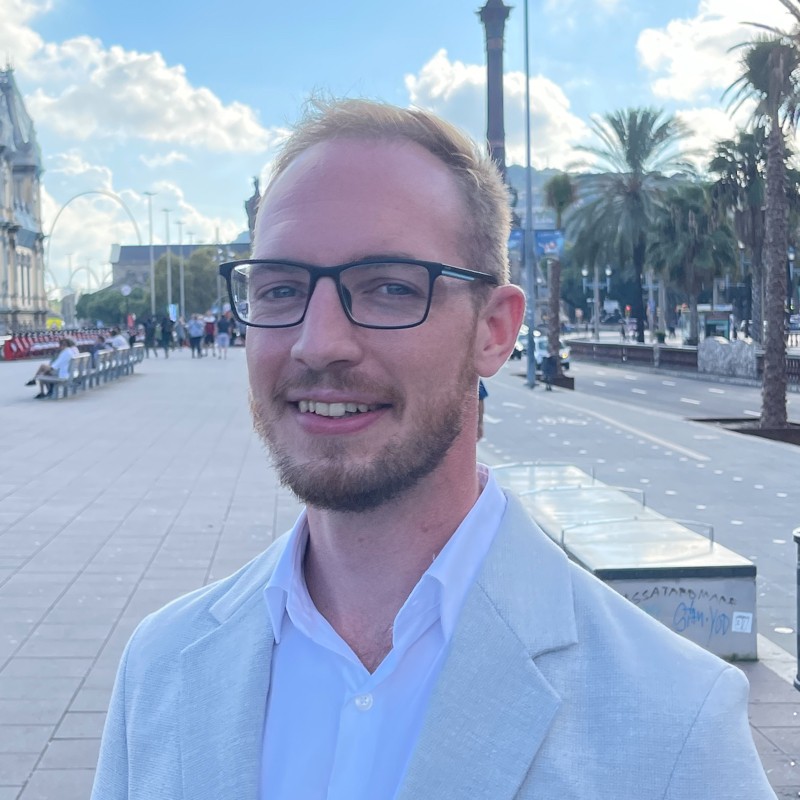
Natalie Furness
Founder and CRO of RevOps Automated
Natalie Furness is the Founder and CRO of RevOps Automated. In this episode, she shares how to build a functional RevOps organization that aligns marketing, sales, and customer success to strengthen the go-to-market motion, including why alignment is difficult to achieve and what traits are most useful for a RevOps generalist.


Full Transcript
Janis Zech: Yeah. Very excited to have you here. Quick introduction around you. You study biomechanics and neurophysiology, hard word for me to pronounce, as your BA, and then worked in clinical operations manager, actually at a prison where you worked on reducing the opioid addictions, like basically becoming addicted again. From there you moved step by step more into marketing and sales focused roles. First also still at more like in the medical field, at medical chain, then at dust age. And then from there, when you look at your CV, it feels like you continually then like step by step moved more and more into marketing roles, fractional and consulting positions at various companies of different sizes and ages. And now you are the founder and CEO of RevOps Automated, which is a full service RevOps agency. And you're also, I think, the founder and president of customer data automation and RevOps Research group that publishes papers and studies around revenue operations. Natalie, welcome.
Natalie Furness: Thanks, Philipp. Thanks for a great introduction. It's it's really interesting to hear that whole journey back to you, actually. It's quite interesting because I started my life, as you mentioned, in this kind of, like, very engineering clinical kind of understanding both the humans and the way that the body works. So very engineering. Then moved into operations, then marketing, then sales, then almost all the way back around back into operations with marketing and sales. And I've never really had the journey like that. So thanks for sharing that.
Janis Zech: Yeah. Is it, is it a, is it a correct sort of like depiction of your career? Would you say it's fair?
Natalie Furness: Yeah, I would say, I say it is the only thing which of course we don't all put on our, our LinkedIns is it was all our number, number of side hustles we've had over the years. You know, the, the little experiments that we've done with. With side hustles, I I've had a few businesses over the years. My first one was when I was eight, actually, I sold friendship bracelets on the playground. And then when I was at university, I started my first proper business in, actually, in the dance sector. So I did my own go to market for that. And then, of course, you sort of covered the fractional stuff, was always kind of like side hustles as I as I grew. So, yeah.
Janis Zech: Okay. But now you're fully invested into revenue operations, right? So there's a consultancy. You do support for all types of businesses, I think, both for HubSpot, for Salesforce, but also for other CRMs and the relating systems. Is that correct?
Natalie Furness: Yeah. So I had this vision that I wanted to help businesses solve their go to market operations, revenue operations challenge, no matter their technology stack. Because I think sometimes you can focus on one technology and then forget that really revenue operations is about the alignment of people, processes, and data systems. And technology is part of that. So we run a revenue operations managed services and also RevOps transformation for businesses who currently exist either on HubSpot, Salesforce, Microsoft Dynamics. And it's all about very much helping people have this single view of truth and also alignment between all of their departments. And that's that's what we do today.
Janis Zech: Yeah. Alignment of all the different departments, I think that's that's something that really resonates with me, Natalie, also because I just this week, I reread the the last annual revenue operations report that's where where you also are one of the editors and publishers, I think. And on one of the first pages of that report, there's like basically a definition of what is RevOps. And I'm paraphrasing, but it's something around it's a business methodology focused on scaling revenue through alignment. And the alignment part is essentially focused on three different things: people, data, and then also the processes relating to that.
Natalie Furness: Yeah, exactly that. And I think it's this word alignment that really, if you're in revenue operations, that's what you need to focus on. And if all the time, no matter what you're doing, you're thinking about alignment between people or alignment of processes across departments or alignment of data visibility across departments, you're always gonna be moving in the right direction with what you're doing. So alignment really is that keyword.
Janis Zech: I feel like this is this is one of the, you know, the things where everybody agrees on. Also on LinkedIn, right, like everybody posts about alignment, alignment, alignment, super important. Seems like everybody's very, very aligned on aligning alignment. But then, like, in reality, it's extremely hard. Right? Like, why is that? From your, from your point of view? Why is alignment one of the hardest things to do?
Natalie Furness: That's such a great question. Most of the time, from what I have observed in practice, so of course we can research it or we like read or we like that actually in practice when I sit in businesses, no matter how big or how small, the problem with alignment is the fact that the goals are not aligned across the business. There is not a key North Star metric that everybody is running towards. There is not. Sometimes the department level goals are not aligned with the North Star metric, and departments are incentivized to compete against each other within departments. Now, there is healthy competition. So I understand why they put that sort of gamification on it. To build true alignment, we need to make sure that we have that North Star metric and then roll down like the OKRs or the KPIs, whatever you use in your business to align with that North Star metric, but also not to conflict with other departments. And sometimes I don't think that businesses think about it at that higher level because the way you commission, the way you bonus structure, the way you set your OKRs for your teams will automatically affect if they will align or compete or clash. I think that's the biggest thing for me.
Janis Zech: Yeah, I think, I think we've all been then seeing that. What would you recommend or what are you recommending your, your clients to how to change that?
Natalie Furness: We often run some workshops with the C suite starting right from the top to understand what are the metrics that really matter to the business. And that often comes down to what are the metrics that really matter to the investors or the future investors that you're going to want to raise funds from. And making sure that that's really communicated transparently down to your marketing sales, customer success leaders, and then making sure that individual KPIs, OKRs, are then aligned with that at the team level. And that itself, that's a transformation project of the way you run goals as a business that that that can take time. And so that's usually where we would stop. And then also making sure that you're running cross like cross department workshops. I think a lot of the strategies and the way we build go to market motions are built with individual teams rather than like multi disciplinary teams. So I'm going use like a health care analogy just because, you know, that's very much my background is, you know, what we used to do when we were looking at operations for better patient care was you would have if someone's having a surgery, you wouldn't just have a surgeon in the room. You'd have the pre ops department. You'd have the nurse. You'd have the physio. You'd have the doctor. You'd have the surgeon all around discussing the holistic care of that patient. You know, what's gonna happen before to mean that they have the best surgery, so they have the best recovery, so they come out of hospital. Business, like what we do is the same, but we need to care for our customers rather than our patient. So we need to have in the same room, okay, well, what is their first impression of our business? What's really going to generate that awareness marketing brand? What does that look like? Sales, how can you tap into that? How can we then start measuring it intent? And we need to start creating this idea of bringing multidisciplinary teams together to step go to market strategies rather than siloing. And that's my thought on that as well.
Philipp Stelzer: Yeah. Yeah, I think that resonates really well. I mean, back when we scaled Weflow to three fifty people, what we saw often was that, like, there's the incentives, and the KPIs. But then also, there's the organisational structure, and how you basically approach the different, like handover point. I'm curious what your thoughts are, especially with regards to the organizational structure of go to market teams. How does you know, good look like for you? What does good look like?
Natalie Furness: I think the challenges with what good looks like is good is in the context of your go to market motion itself. We first need to recognize that every business has a different go to market motion. Some businesses are focused on a product led go to market. Some are more focused on marketing inbound. Some are more focused on sales outbound. Some are more focused on partner. These are the different motions. What I'm seeing more and more, though, is a you know, go to market motion where businesses now have sales assisted product or they have self assisted marketing or they will have a partner. They'll have all of them, not just one. So in terms of what good looks like in terms of the structuring, you need to have an alignment over a go to market motion rather than thinking about it in individual teams. Think about it in motions. So what is the alignment of our product led growth motion? Because let's face it, someone to join your product or to even sign up for free. They're gonna need to look at some marketing assets and marketing's involved there. Then they're going to need to be in product. And so then you've got your in product marketing. And then you've got your product team who are making sure that you're looking at the activity and the way that these people are utilizing the tool, which then is going to flag up potential opportunities, which then might trigger a salesperson to reach out to that person or, depending on the score, a a different marketing campaign to reach out before it goes to sales. That whole motion requires a multidisciplinary approach. So every motion should have its own multidisciplinary approach. I don't think there's one motion I can think of that doesn't require skills from marketing, sales, customer success, and product, really. So that's my thoughts anyway.
Philipp Stelzer: Yeah, I think that resonates super well with me. I mean, as the founder, I think you think about all these different things, right? And the product has a big impact on go to market success. But without strong go to market motion, you can build the shiniest best product and nobody cares. Right? So if you think about that org structure, I mean, obviously, there's been a rise of RevOps, there's been a rise of the CRO. But then still often the CRO is a new title of the CSO. I mean, I'm curious what your thoughts are about, you know, actually the CRO owning everything end to end. What should be their backgrounds? You know, where do you see shortcomings? I mean, you're smiling. So I'm probably can't see that in the audience. But, you know, I'm curious your thoughts about this this topic.
Natalie Furness: Do you know what I'm really excited about that Sixth Sense have just promoted their CMO, Lanny to their CRO. I'm excited by that because it's so nice to see people from some different backgrounds come into the CRO positions. My view is that if you're ahead of sales and you've only worked in sales and sales is all you have ever known and you have a blink of view, that sales is everything to do with a business growing, that's not a CRO. It's just not. Now, if you're a sales leader who's also been involved with a marketing motion, who's also been involved with understanding how product works, who also has had some experience even in customer service. Great. That's a great CRO. If you are an end to end marketer who also has experience of selling, I think that makes a great CRO. I think marketers let themselves down when they assume they know how it feels to sell. And they've never sold themselves. So if you're a marketer out there looking to move into RevOps, just go get some feel what it feels like to sell. Because if you can't empathize with a salesperson, it's going to be very difficult to lead and build processes for them. I also met a few engineers that have ended up gone from a product side into more of a CRO position, which I found quite interesting. I haven't met too many of those. I have met a lot of CROs that become blockers to the development of good revenue operations because they're only focused on sales. But I've also met some CROs that have come from sales backgrounds who are happy to admit that they don't know everything. So therefore, they empower their CMOs and their head of customer success and their RevOps teams to fill in the gaps for them. And I don't think necessarily a great CRO has got any yes, background matters. It's nice to have a multidisciplinary background, to have some generalist background, maybe with an area of specialty. But then to be aware, this is my area of specialty and these are the areas I am not as skilled at. And the greatest skill of a CRO is to know where their weaknesses are and put the right people in those places to elevate the business. And I think that's the true trait of a great CRO.
Philipp Stelzer: And it sounds to me, Natalie, like really what you're advocating is, stopping with matrix types organization or matrix style organizations and really, thinking about like, okay, how can we structure our business in a way that there's not really any chance from a, like, a, you know, organizational kind of, like, perspective to even create these silos. And it sounds to me like like, you know, if I if I continue that kind of, like, train of thought, like, it would mean to me that, okay, actually, you would have to have, I don't know, sales enablement teams, analytics teams, and so on, all sort of like report into a RevOps type of person, would you say that's true or am I going too far here?
Natalie Furness: I'm I'm just thinking for a second. I don't know if everyone should report into a RevOps person, but I certainly feel that revenue operation should help lead the way in which teams do their reporting. So slightly different. So what I see in a lot of businesses is that teams are left to their own devices on, on the dashboards. They build their own dashboards. Sales thinks they need this dashboard. So they build this dashboard because it's going to help them achieve what they want marketing, build this dashboard, you know, customer success, customer service, they build their own dashboards and then perhaps instruct RevOps on what needs to be built. Now, my thought is this should be flipped and the RevOps should help the team see what needs to be built so that they can all be achieving their OKRs and then the higher business OKRs. Give them the framework and the templates for them to do their reporting. And then we should be coaching the leaders on being able to run coaching sessions with their departments on those dashboards, which have been approved as dashboards that actually roll up to the higher goals. So I don't know if that quite answers the question, but that's how I see the function of RevOps in the business.
Philipp Stelzer: So it's more like a facilitator role that enables the other teams to work to the best alignment, like with the best alignment possible. Right?
Natalie Furness: Yeah. I see it very much as a really important backstage role. You know, like if you go to the theater, you see the artists, you see the performers, you see the amazing sets, you see the amazing special effects, you have this amazing experience in the audience. What you don't realize is that there are a ton of people wearing black in the wings behind the set, moving all these things, orchestrating, and making that experience work. Because, you know, without the costumes, without the lights, without the special effects, that performance would be people doing something on a bare stage. So that's kind of how I see revenue operations.
Philipp Stelzer: Yeah, I think it's so interesting. You started we started out with, okay, what is the North Star? What are the, you know, few KPIs that matter? And the notion of thinking about the go to market end to end, right, like, basically, from all things, including product even, right, like, marketing, post sales product, how do you make that a success, and RevOps, essentially being the, like, owner of the KPIs, enabling the teams to be more successful instead of, you know, reacting to what's actually happening and what the wishlist is, right? Which I think is, is always a problem if you have multiple teams with different incentives. And the reality is that most marketing, sales and success teams have different incentives in our today's life. So having a central function that looks at it end to end, and also owns the enablement, the reporting, the insights in an enablement functional function makes makes complete sense to me. I'm curious, like, you know, if you think about the RevOps team structure, you know, how do you achieve that successfully? And I mean, obviously, it's in context of stage of the company, size of the company, and also complexity of the products, right? So I don't think there's like a clear answer. But let's say, yeah, maybe you choose, you know, the dimensions and then would curious how you how you see the structure.
Natalie Furness: I think deciding what structure you're going to move towards very much, as you said, depends on where you are now. If you are starting from fresh, from zero, like you have no RevOps function, my thoughts would be focused on having a data insights analyst, focused on having, you know, a revenue operations data manager who maybe focuses on the CRM, maybe even have a couple of people in the RevOps side that are managing different tools but communicating together, then having a RevOps director who is more focused on the strategy for revenue operations across the whole business so that we're not actually getting these silos of marketing sales, customer service, or success operations. However, it's difficult to transform into that completely agnostic practice if you already have marketing ops, sales ops, and customer service ops in practice. And this is a debate that I had with Mike Rizzo, who runs Marketing Ops Pro, about should we take away these specialisms and actually make people fully aligned across all? And it's hard for people who who are marketing ops specialists, sales ops specialists, customer desk ops specialists, they kind of in themselves are creating silos because they are only they're focused on that one area. And, actually, what's been really interesting is I found that these people in themselves compete against each other. The marketing ops person is trying to outdo the sales ops person who's trying to outdo the customer success ops person. So that's creating even more silos. And I think maybe that's because these people report up to the CMO, the CSO, or VP of sales, and then the director of customer service. Maybe the way to do it is to take that marketing ops sales ops customer success operations, sit a revenue operations director on top of them, and then those people report to the revenue operations director who has the view of everything, pop a specific analyst in there who can be feeding back the data analysis in the feedback loop. If you're looking to do a transformation, that's probably how I would look to do it if you have those three specialists in the area.
Philipp Stelzer: Yeah. I mean, like one thing that like I worked in gaming a lot in my past life. And one thing that happened there during my time was that really like this role of the data scientist came up for the first time, like really like much more professional, really like proper data analytics. And that was obviously extremely important for mobile game development. Like you always want to look at retention, LTV development and so on, and you have a lot of data points, so it's great. And the way that we organized that was like basically so data science was its own team, but they didn't have like their own like office space, but basically they were embedded in the different development teams for different games. So the data science team was extremely well aligned cause they did, like, their own stand up every morning, but then the data scientists kinda, like, then went to all the game teams that they worked in and worked with and then brought back insights from the, you know, sort of, like, the the morning stand up that they have, but then worked on the respective projects in the individual teams. Which made a lot of sense to me. Right? Like, I think there's also, like, for me a way to to solve it is like this. You know, if you have challenges within your current organization and you cannot just change everything, you cannot just put, like, a director of revenue operations in front of, like, you know, like the the sales enablement manager or, like, you know, if you don't wanna break that that setup, I think there is also this option of, like, embedding people in the teams, and that also fits very well to the service character or, like, support character, I think, that RevOps easily can can take up.
Natalie Furness: And I think I think people underestimate the the power of this, like, data analytics role in general, like having someone whose job it is to almost be like an unbiased outlook. Like, so they don't sit in any team, as you said, and be able to feed, look, guys, I know that you're emotionally attached to this stuff, but what the data says is this. And I'm, you know, I'm an outsider. And it's like having an outside consultant and bringing them into your business. You know, they can help you achieve a lot more. And I really like the idea, Philipp, as you sort of saying about projects. I think RevOps should definitely be involved in more projects, you know, coming in to departments, doing mini transformation projects, just like you would pay an external consultancy to do. Think of your RevOps as that team to really elevate, accelerate, run those impactful projects. RevOps is not a servant to the teams. RevOps is the, you know, the team that comes in as that strategy and then implements the systems that are gonna help the businesses scale.
Philipp Stelzer: Yeah. I have a pretty strong opinion on autonomous teams. I think that in the past life, you know, like many companies had a lot of silos, and they just had silos, and they just couldn't execute on many things, because they didn't have the skill sets, right? If you think about a revenue organisation, I think RevOps often brings in those skill sets that are fundamentally missing. That is system thinking, process thinking, enablement thinking, data insights, and right and then there is, I think some sort of specialization makes sense if you think about how complicated marketing attribution has has gotten and things like that, right. But I still think it's so important to have that centrally think about the general go to market motion as you outlined, right? Because if you don't have that, you start building your own tech stack, you start building your own incentives, right? And so I think just embedding isn't good enough anymore. I think you need basically a central view of the entire go to market motion. And you know, to the earlier example of, you know, what is a good Chief Revenue Officer, right? Like, I think the like, I think it's just something that back in the days was done as business integration teams in a central way. And you looped in requests and waited three weeks for something to happen that you know, and that is just not not fast enough anymore in our day.
Natalie Furness: Sure. And as we're having these conversations, it really does depend on the size of your business, where you are, all those sorts of things. Because, I mean, we've got more challenges now where there's lots of businesses that are remote and distributed and actually don't even meet face to face on a weekly basis. There's all these things. And one thing we haven't talked about that I think is really important to acknowledge as well is actually building a culture of alignment. Actually thinking about how do we build a culture alignment from day one in a business. And it's something that I'm testing and trialing at the minute at RevOps Automated as I build the business. I'm thinking, right, I want to build it with a RevOps mindset from day one, build it with this alignment. And it's been really fascinating. The small things that I've seen people do that is causing silos. Like, for example, we we've started creating this sales playbook. And I I wanted the sales playbook to be this continuously evolving collaborative document where as people learn things they kept adding. But actually, what was happening is that people learn things. They just started taking their own notes and not adding them to the document. So we had to almost have the session of, you know, what are the barriers? Why do people feel like they can't add it to this central document? And it was really funny what, you know, came out of it. People are all worried about my spelling or is not neat or and actually, some of those barriers for, like, the alignment of wanting to share information has got a lot to do with just humans worrying about what the quality of their work is and sharing and collaborating and and actually breaking down those barriers. You know, we want to unsilo everything. All documents should be shared, be working, should be joined together. Because otherwise, as soon as people get used to having their own documents and storing them and not sharing them, we've got silos. So I just wanted to share that because it's something personal that I've learned quite recently. I think it's important.
Janis Zech: Yeah, it's such an important and also challenging thing. As Philipp mentioned in the in the beginning, and it I love that you're touching on culture, you know, I'm a big believer that, know, it's the way you act day to day, right? It's not what you write on your walls, but it's actually the operating principles. And if your leadership team, especially the leadership team doesn't embrace that in the revenue organization, it's really hard to solve it from from my point of view. Because if you're an AE and you're comped on fifty fifty plus twenty twenty five, right, like it's, it's clear that maybe you don't spend as much time on alignment, of course, you can have a better version of that. But if you if you culturally embrace that, but still, that is just the reality in most in most companies these days. But if the leadership team doesn't recognize that it is just fundamentally broken, and I think the org structure has a big impact on on that fact, right? Like, and then what kind of, you know, operating rhythm the business has, and who sits in those meetings or documents, whether that's synchronous or asynchronous is also really, really important.
Natalie Furness: Yeah, I love that point. It's so important. And just to kind of riff off that, it just made me remember an ex client of mine. And I'm not going to name any names here, but there was a particular founder CEO who turned around after we had done a lot of work on the RevOps and said I don't want to hear the word RevOps. I agree. It is not something I am into. I don't want RevOps. Then they went and did their round of funding, which they didn't manage to achieve because all the investors said they weren't showing operational efficiency and profitability. So instead of a round, they got a bridging round. And now guess what? They're focused on RevOps. So I I wanted to share that with the audience as well because particularly in this day and age, if you have a leader who doesn't seem to be focused on this revenue operations or this idea of creating operational efficiency, really focus on if we want to raise our next rounds, if we're focused on getting some of the best investors, or even if you're looking at getting acquired, these margins matter. Profitability matters. And those days in which investors just have tons of money to throw at any business are gone. Okay? So operational efficiency, if your business can out operate your competition, you are going to win funding over others.
Janis Zech: Yeah. Founders, executives, listen up. Those are some wise words. I fully agree. On that note, I think we always ask all our guests one closing question, and definitely want to ask you the same. So here it comes. What advice would you give yourself when starting your career all over again?
Natalie Furness: Yeah, I think the biggest thing for me, and this is something that I'm trying to teach more and more RevOps people because I wish I'd learned this, is focus on impact. When you are designing a project that you want to implement in a business, look at measurable impact. I know you're gonna say, well, I don't know what the impact is because I haven't done the project yet. You know, how do I know how much time this is gonna save? Well, how do I know how much money this is gonna save the business? Do what your sales teams do. Forecast. Estimate. Use a model that you can think of. Estimate. Okay. Well, if this all goes to plan, it will save the business this much time. The time for the business is worth the equivalent of this, which will free up the team to do this, which could have an impact on this metric. Build those metrics because I guarantee when you are putting that proposal in front of key stakeholders in the business, you are going to be able to do that RevOps transformation you want to do if you forecast the impact. That's what I would have wished I knew.
Janis Zech: Love it. Yeah, I think very common, right? New starters in jobs focus too much on making a nice spreadsheet or, like, having everything perfect. Yeah, just like wrong focus. Impact? Perfect. Love it. Cool. Natalie, thank you very much for joining. It's been a pleasure and all the best and looking forward to the next State of RevOps report.
Natalie Furness: Thanks all. Thank you.
More from RevOps Lab
Learn more about GTM & revenue operations
RevOps Lab Podcast


Free Forecast Cheat Sheet

Free RevOps Salary Report


